Tuesday, August 26, 2008

Do you hear chuckling when you tweet?

A great post over at Fistful Of Talent (FOT) today made me think. I was recently at a meeting of colleagues in the HR teaching/research game. We were discussing ways to build a community of practice around improving our teaching in HRM. I mentioned a couple of possible technologies, including Twitter and Ning, which may be useful in building and maintaining a social network around this focus. We use both of these for developing and maintaining our social network: www.HRMtheJournal.com

Anyway, the response was consistent with that identified by the survey by Third Age/JWT Boom and discussed by Kris Dunn at FOT: Snort... why would we be interested in that... kid's stuff... what the xxxx is Tweeter (sic)... etc etc. Some of you may recall similar responses when trying to get colleagues, family members, or god forbid bosses (!) to use email about 15 years ago. The chart tells the story:

So what's the harm? Can't we just leave it to the young-un's? Well sure, you might do that. The problem is, you will be slower, less well informed, and less capable of communicating with your future peers (as those young-uns race up the hierarchy and eventually out-pace you in promotions!).

For us Academics/Writers/Researchers/Consultants the need is no less powerful. Staying abreast of the latest tech is what separates the winners from the losers in a world of freelancing, independent, long-tail livin' knowledge peeps... Just ask the guys at FOT!

Of course, perhaps blogging about the need to be tech savvy no matter what your generation is a little like heading to Salt Lake City, Utah and recruiting for the Church of the Latter Day Saints. (disclosure: I spent 3 years living in Utah before making my escape)

Your Employees Touch Your Customers


In case you were not sure, it is official. ALL of your employees can enhance or diminish your reputation. They do this from their desk, at lunch, and as consumers (ask how many GM employees are currently buying GM cars!).

This young lady recently reached out across the globe and 'touched' a consumer (markm49uk in the UK). You see, she assembles iPhones at the Foxconn factory in Shenzhen. Looks like she (or perhaps a coworker) failed to erase a test photo on a newly assembled phone. No harm done, latest reports are that she has not lost her job.

What is interesting here is the power of the
interwebs to make these stories connect. After all, only now could we possibly imagine that we could so easily identify who this was, who was affected, where the 'prank' occurred, and what the outcome is for those involved. In this case, no real harm. However, as we increasingly network and connect at all levels of life, the power of your employees and your customers to connect (bypassing official channels) is also increasing. What does it mean for your corporate reputation?

An important conclusion is that to manage your corporate reputation, you must also watch out for the relationship that you have built with your employees. Do you care about them, and value their contributions; do they know it; will they reciprocate and care for the organization and its customers? Without sufficiently strong relational bonds between the organization and employees, you cannot expect there to be mutually beneficial, supportive behaviors (and vice versa - without these mutually supportive behaviors, there will not be strong bonds!).

First place to look to see if you have good relationships? Supervisors are perhaps the most important driver.

What are you doing to monitor and manage employee-organization relationships?


Sunday, August 10, 2008

Open Source Management Text


Sitting here with hundreds of my new friends and colleagues in the Managing Through Collaboration (MTC)* project meeting. Here is a revolutionary approach to writing a text. It leverages the notion of wikinomics, including multiple (1,000+) voluntary contributors, and web 2.0 tools (Facebook, Twitter, wikispaces). The idea is that we develop a truly global book about management, with an emphasis on collaboration, and that we practice what we preach...

Yes, that's right, we (academic researchers, teachers and authors) will work together as a largely virtual and global team, to produce an entire textbook (to be published by Routledge in 2010). How will this work? Can it work? In large part, this may be seen as an experiment. However, there are some precedents to this kind of organization in the 'scholarly arts'.

For example, the Global Entrepreneurship Monitor (GEM) program, has successfully brought together dozens, if not hundreds of scholars to measure, analyze and evaluate the progress of entrepreneurship in 42 developed and developing countries around the worlds. This collaborative project has been a tremendous contribution to our understanding of entrepreneurship and economic development in recent years. However, GEM is not producing a textbook, it is 'only' producing research and reports (no mean feat).

Is it possible to write a book using collaborative principles? We have bounced around words like 'open source', 'wikinomics', 'web 2.0', but how far can this project really take these ideas and survive (or at least be completed by deadline!). First, what are the principles?

1. Open source means just that - anyone may contribute, although their contributions must stand-up in the community, that is, they must be deemed to be of high quality by the community

2. The community will police itself - once a structure is in place to allow the contributions to be submitted, shared, edited, revised etc. then the community will actively separate the wheat from the chaff, reward the valued contributors, and sanction those who stray too far from the community goals.

3. The strength of the model lies in its egalitarian approach. You are what you contribute, regardless of geographic location, pedigree, formal education, politics or any other personal differences. Whether you are a community college professor, PhD student, Academic Dean, Emeritus Professor, Consultant, Business Leader, each has the opportunity to join the project and contribute.

4. We are our own market. If we do a good job, then we will also consume the product ourselves.

Can these principles really be upheld in the context of a textbook for undergraduate students in the field of management?

First, management texts must generally conform to some fairly standard contents or 'core knowledge'. The commonly adopted framework these days is Plan, Organize, Lead and Control. Within these four categories you will find a variety of topics/chapters on motivation, leadership, organizational structure, information systems, communications etc etc. And, within these subtopics, you will find it important to cite the most significant and well established research findings. This substantially reduces your degrees of freedom in terms of content.

Second, because the book will be produced in a text format first (followed by digital/web versions later) you have significant space and time constraints. Space constraint, because you must cram all of this information into 6-700 pages of a standard management text book sold to undergraduates (at least in the US). Time constraint, because between project conception and birth of the book will take approximately 2 years, with just 8 months for brainstorming, benchmarking and writing of content. These constraints can further restrict freedom and creativity in the name of getting the job done.

Third, while we have a wealth of technology options, sometimes this diversity in communications tools becomes overwhelming. After working with the Chapter team on the HRM topic for 4 months via email and the wikispace we are using, our first face to face meeting was spent resolving a host of fairly important but basic issues such as deadlines, content questions and so on. Even when we focus on a few of the multitude of tools (email, wiki) and ignore others (linked-in, facebook, secondlife). This problem is compounded when there are wide differences in personal capabilities, comfort level, or even access to the technologies required (e.g. secondlife).

Fourth, the overhead of developing the content, coauthoring, and policing the contributions is something that becomes less appealing, especially when there are not many tangible rewards for participation. After all, this is time that could be spent on 'real research' or other activities that may be recognized by the administration and relevant to promotions or rewards.

So what is to be gained? First, by bringing together such diverse 'voices' in the process of creation, the content, examples and presentation of otherwise 'standard knowledge' should take on a unique color and flavor. It may be a cacophony, a babel-like mess, or it may be something greater that is attractive to a new generation of students in ways which us 'old fogies' cannot imagine.

Second, we have global perspective built into the team. Each chapter is written by up to 50 individuals, frequently representing as many as 20 countries (over 90 countries are represented in the project at this point).

Third, we are creating this book about collaboration by collaborating - and this brings a shared experience to the process like no other. Will we remain friends? Will we remain academics?! Will we even keep out jobs?! Or will we find new opportunities and new friendships, not to mention new understanding of our little world?

In my opinion, in order to succeed, this project will never be a true 'wiki' or 'open-sourced' text book. It cannot be. That model does not fit the needs of any of the current stakeholders - publishers, authors, teachers or students. That is not to say that we could not produce such a work. I think a true wiki for management knowledge would be a wonderful thing. But you (and I) would have to do it for love, not money.

I would love to discuss that last idea with anyone who may have an interest...

*This project was initiated by Prof. Charles Wankel, St Johns University, New York. His creative spark has set a lot of us into motion.


Thursday, August 7, 2008

Your roaming reporter heads to Disney for Academy of Management Conference

Due to summer conferences, exec education programs, a hectic summer at http://hrmthejournal.ning.com/ and did I mention summer (see http://tw0o.blogspot.com) I have not posted for a couple of weeks. However, expect this to change shortly as the annual meeting of the Academy of Management is upon us. I hope to blog about some choice new research findings in the employment domain, live from Anaheim, California...

Yes that's right mom, I'm going to Disneyland!


Sent from my BlackBerry® wireless device

Monday, July 7, 2008

Malcom Gladwell Knows Everything!


In this rather lengthy video which ultimately may be considered a preview of his new book, Malcolm Gladwell regurgitates a thread from Moneyball and one which is the core topic of concern to any selection specialist. The focus is on the problem of identifying effective predictors of job performance. As in Moneyball, MG discusses the use of field tests as predictors of future performance in sport. He also uses examples of cognitive test in the National Football League, physical abilities tests and subjective tests as predictors of performance in hockey, football, and basketball.

The focus is on what MG has termed 'mismatch'. Mismatch means identifying the wrong person for the job and fundamentally rests on choosing the wrong predictors (as was the story in Moneyball). To generalize the problem, MG goes on to provide examples of the difficulty of predicting effective performance in teaching and in the legal profession.

In teaching, the question is what predicts teacher quality? This is clearly important as it has an impact on student learning. Traditional predictors include various dimensions of education and experience. To teach in the US you must have a first degree, certification, state licensing, and academic work specific to the specialty. As reported by MG apparently there is no relationship apparently between these predictors and teacher quality.

What is missing from this discussion is a definition of what being a good teacher is. It is true, that in part a good teacher is one who contributes to improvements in test scores of students. However, many would argue that simply seeing standardized test scores improve cannot be judged the only indicator. What if you are lucky enough to work in a school where you have bright students. They will learn despite your efforts to the contrary! What if you are unlucky enough to work in an environment where students have other serious distractions such as family troubles, poverty, gang violence? Can we judge a teacher as poor even if her achievement is simply to keep kids in school? How will we measure this criterion (similar issues for Doctors and Lawyers by the way)?

Unfortunately, in his rant, MG has made a fundamental error. He never considers the complexity of measuring the criterion - what is an excellent athlete, what is an excellent teacher or lawyer? By obfuscating this half of the equation, it is unlikely that any satisfactory analysis will be achieved.

However, Gladwell does pose a challenge to selection specialists everywhere. In a world that is complex and dynamic, where the required behaviors are uncertain, should we continue to search for predictors of performance? Here in my opinion, are some of the flaws in the logic of Gladwells argument:

1. He ignores the fact that even a weak predictor is actually likely to improve your odds over no predictor at all (chance) or a bad predictor (stereotypical ideas of a good performer). If you combine several modestly predictive measures you can significantly impact job performance of new hires.

2. Performance is complex and must be defined clearly. Sometimes we can predict parts of a job performance rather than overall job performance.

3. Using standardized predictors increases actual and perceived fairness. It helps us to ensure that blacks, whites, women, men, old and young etc. all receive consistent treatment. Furthermore, it enables us to hold companies accountable for how the decision is made.

4. Despite the examples of cases where selection systems do not work, MG ignores the fact that when done well, careful selection improves the average performance of the employees hired and that has a positive impact on organizational performance. This was the other side of the story in Moneyball!

I am looking forward to Mr Gladwell's book. He chooses interesting topics and writes beautifully. What is your opinion, is selection more or less important as the world increases in complexity?


Waive goodbye to your employment rights


An article from the Detroit Free press suggests that it is rather easy for an employer in the US to overcome statutory limitations on filing sexual harassment and other discrimination charges. While the EEOC allows up to 300 days, and other state laws allow up to 6 years for a statute of limitations, employers may simply build shorter limitations right into their employment contract. This is apparently what Chrysler (alone among the major US auto manaufacturers) is doing. Specifically, it is limiting employee claims to 6 months. Any occurances older than six months are disallowed under the employment contract - and this has been upheld by US courts.

Consider the situation - you are denied opportunities or benefits based upon your age, sex, or national origin etc. The first time this happens you are unaware of the issue, over several months or years the pattern becomes clear. Eventually you become so concerned that you wish to act. You file a complaint. Only the specific events that have occured within the six months of your complain may be considered as relevant. How would you feel? How would you feel when you realize that the intent of the labor law of your country was quite simply undermined by the fact that employers are allowed to ask employees to waive their legal rights in exchange for a job?

Now consider that unemployment is rising throughout the developing world. The pressure to accept a job when offered, no matter how unfair or unreasonable the terms, is rising. At a time when employees only defense - the labor union - is at it's all time weakest worldwide, who or how will employees redress the balance in this very unfair bargain.

It will be interesting to see how smart employers deal with this weakness in the labor union and the increased power that they have for doing bad (evil may be too strong a word here) as well as doing good. What happens when you build a reputation for such shenanigans and then the labor market gets tight once again as we expect it will? Who will want to work for you? Will you labor costs be higher than your competitors? Will you employees be less committed?


Saturday, July 5, 2008

We call it regression to the mean


When you see outstanding performance on a regular basis, it is quite possible that you will sooner or later see performance that is closer to the average. This is a statistical necessity called regression to the mean. In the case of a company with an outstanding record, it is quite likely that we will sooner or later see a drift towards the average.

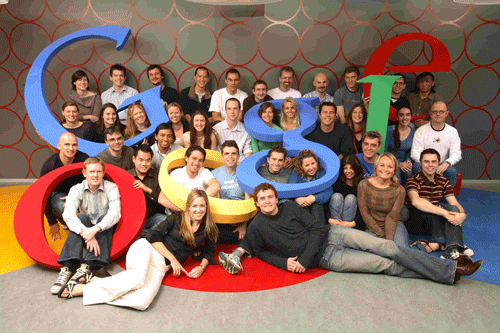
Google seem to be experiencing issues like this recently in terms of their people management practices. Not surprisingly, as the firm grows and grows it needs to control costs and promote the return on its people practices. Now, Google is receiving flack on a number of fronts. Just this week, the New York Times reports that Google has announced an increase of 75% in the price of child care for employees:

"Parents who had been paying $1,425 a month for infant care would see their costs rise to nearly $2,500 — well above the market rate. For parents with toddlers and preschoolers, who were charged less, the price increases were equally eye-popping. Under the new plan, parents with two kids in Google day care would most likely see their annual day care bill grow to more than $57,000 from around $33,000."

According to Silicon Valley Insider:

"the Google co-founder Sergey Brin said he had no sympathy for the parents, and that he was tired of “Googlers” who felt entitled to perks like “bottled water and M&Ms,” according to several people in the meeting. (A Google spokesman denies that Mr. Brin made that comment.)"

Is this also a case where a company has built a reputation for its remarkable HR practices only to suffer when reality creeps in? Could it be that HR must be careful in terms of long term planning - how fun and attractive can we reasonably make this company if we expect to be held accountable for costs and returns in the long run. Is it really true that the 'Googlers' feel a sense of entitlement, or is this backlash to be expected when you seem to be breaking a psychological contract. Google promised explicitly not to be evil. They also promised, implicitly, to take great care of all of their employees needs. If they are seen as breaking these promises by insiders and outsiders, it will no doubt impact their employment brand and ultimately their corporate reputation.

There are a number of clouds on the horizon. In a recent blog, one insider explained why he was returning to work at Micrsosoft:
"There are many things about Google that are not great, and merit improvement. There are plenty of silly politics, underperformance, inefficiencies and ineffectiveness, and things that are plain stupid. "

It will be interesting to see how Google handle this next phase in their life - as they move beyond the 'everyone loves us' phase. Are they going to regress to the mean - at least an 'industry' mean if not the 84.hour.week.working.at.the.steel.mill mean.